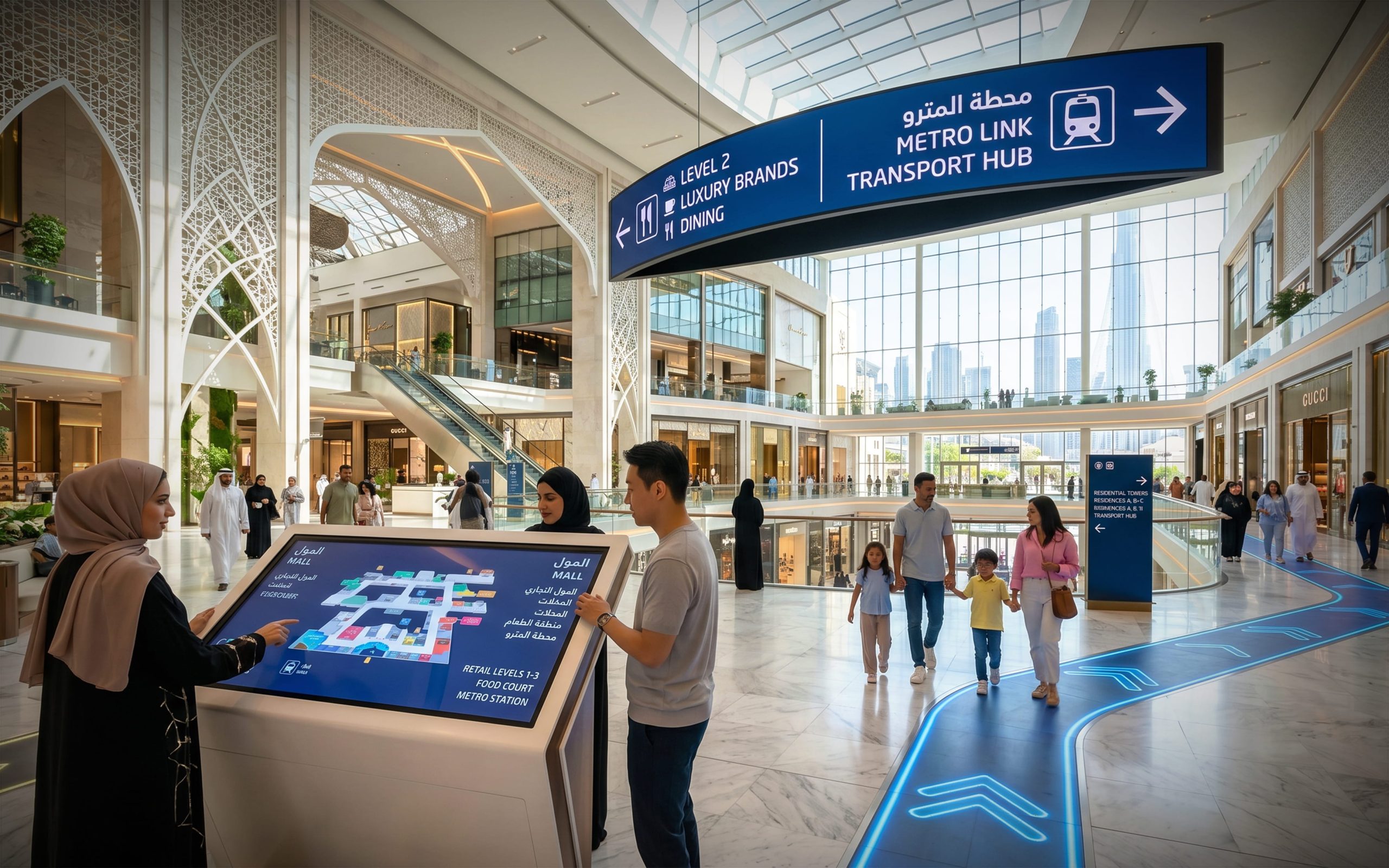
Protecting Design Intent Through Delivery
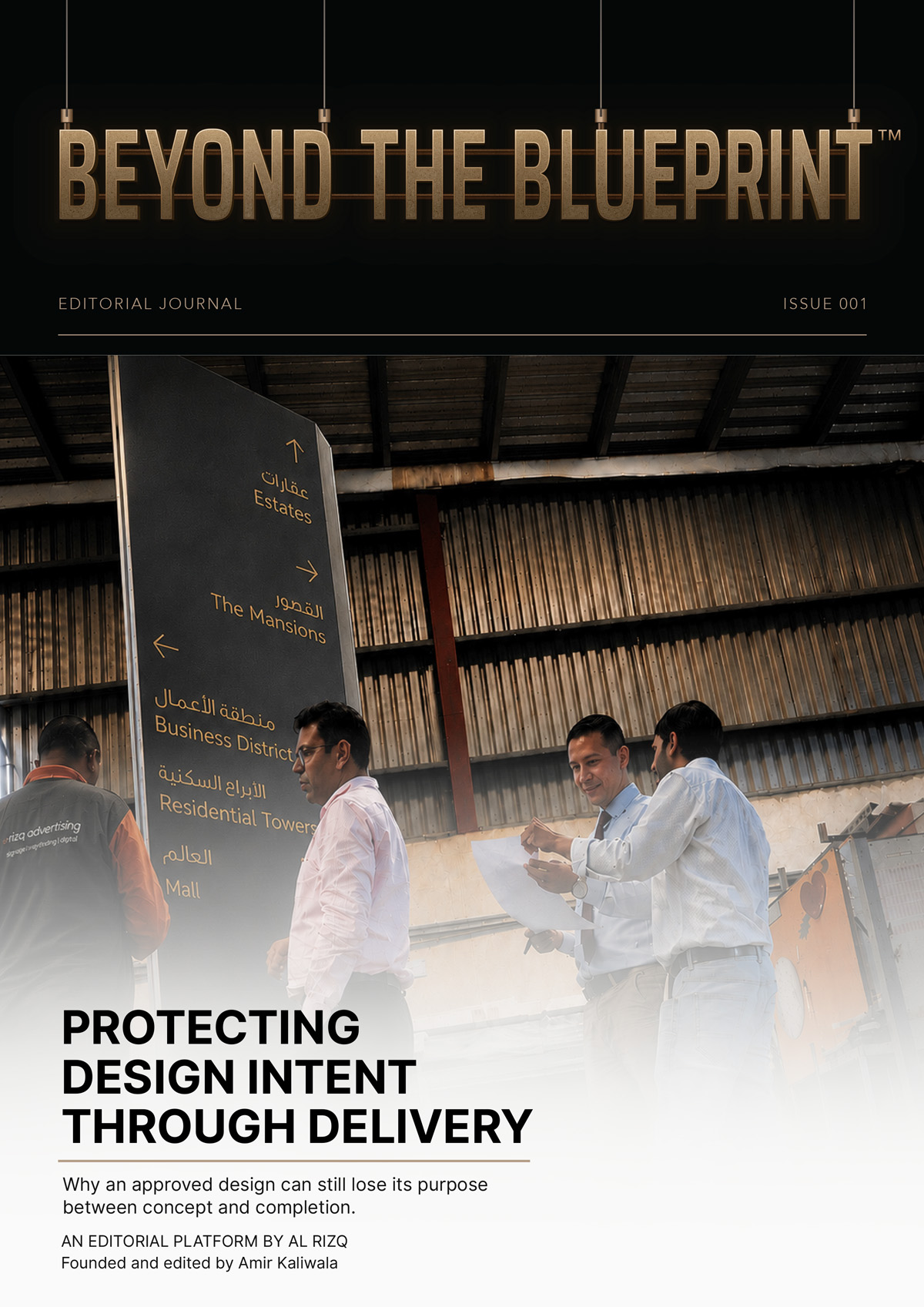
Why an approved design can still lose its purpose between concept and completion.
“Design intent is rarely lost through one major decision. It is gradually diluted through a sequence of disconnected decisions.”
In this issue
- 01Protecting Design Intent
- 02Lessons from Practice
- 03The Delivery Gap
- 04Align the Purpose. Validate the Solution. Protect the Outcome.
- 05The Editorial Conversation
01Editorial essayProtecting Design Intent
Every development begins with an ambition. A developer has a vision for how a place should function, feel and be experienced. That vision is interpreted by architects, consultants, engineers and specialist designers, who translate it into coordinated spatial, functional, technical and material decisions.
The purpose behind those decisions becomes the design intent.
Design intent is therefore more than the visual appearance shown in a rendering. It includes the experience the development is meant to create, the functions it must perform, the character it should express and the standard of performance it must maintain. Drawings document this intent. Specifications describe it. Approvals confirm it. But none of these can protect it on their own.
Once a design enters budgeting, engineering, procurement and construction, it encounters practical realities. Materials may be unavailable. Costs may exceed expectations. Engineering requirements may change a detail. Site conditions may demand modification.
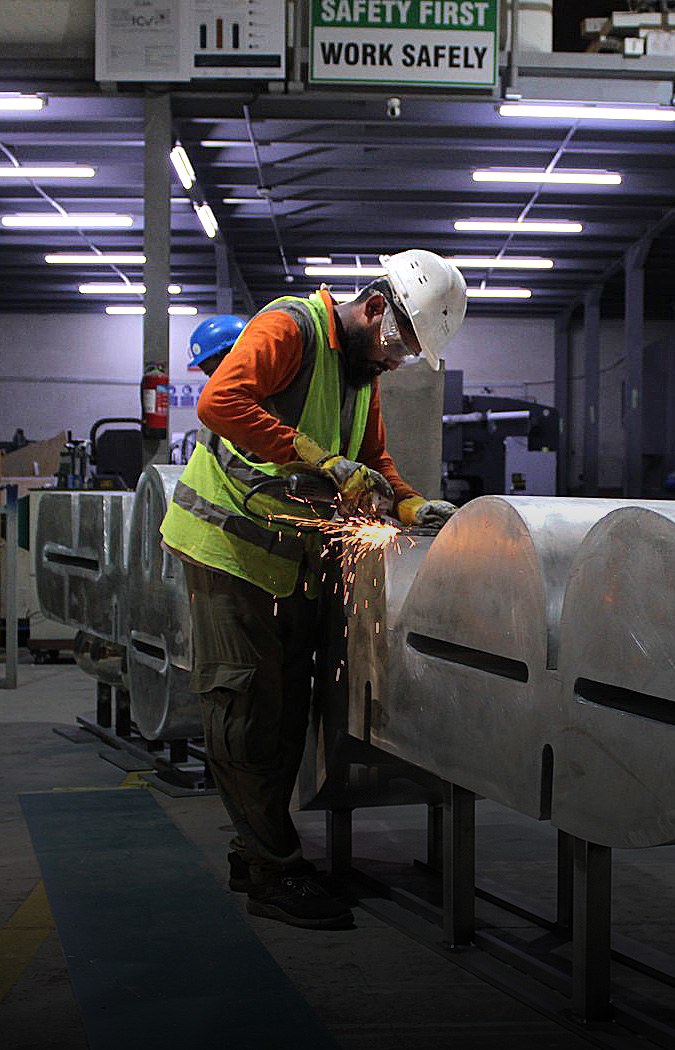
Fabrication methods may expose issues that were not visible during concept development. Change itself is not the problem. Change is a normal part of delivery.
The real danger begins when each change is evaluated only against an immediate requirement—cost, programme, procurement, fabrication or installation—without understanding what the original decision was intended to achieve. One substitution may appear harmless. One dimensional change may seem insignificant. One material reduction may produce an immediate saving.
Yet, when these decisions accumulate, the completed project may no longer provide the experience, function, performance or character the developer originally intended. The design may still be completed. The drawings may still be closed. The project may still be handed over. But its purpose may already have been lost.
02Lessons from Practice
Observation
A design can progress through concept development and approval before its true fabrication cost, material availability or buildability has been adequately tested.
Challenge
Once the project reaches procurement or construction, the delivery team must reconcile the approved design with the actual budget, available materials, engineering requirements, programme and site conditions.
Decision
Elements are simplified, materials are substituted and details are modified to make the design commercially or technically deliverable. Each decision may solve an immediate problem. But when changes are made without reference to the original purpose, their combined effect can materially alter the intended outcome.
Impact
In one of the most serious situations we encountered, an approved signage design had to be abandoned because the cost of fabrication was far beyond the client’s realistic budget. The failure did not begin at the factory. It began when design ambition, available budget and fabrication knowledge were not brought into the same conversation early enough.
03Lessons from PracticeThe Delivery Gap
| Intent | Reality |
|---|---|
| Approved design | Unvalidated fabrication cost |
| Specified material | Availability or durability constraint |
| Visual expectation | Engineering and installation requirement |
| Project ambition | Actual delivery budget |
A design that cannot be delivered within the project’s realistic commercial and technical conditions has not yet completed its journey from concept to solution.
04Three disciplinesAlign the Purpose. Validate the Solution. Protect the Outcome.
01. Align the Purpose
Establish what must not be lost before disciplines begin making independent decisions.
The developer must clearly define the intended experience and priorities. The design team must translate them into coordinated and understandable principles. The budget must reflect the expected standard of delivery.
02. Validate the Solution
Introduce specialist engineering, material, fabrication and installation knowledge while the design can still evolve intelligently.
Early validation is not an attempt to reduce the consultant’s authority. It enables design ambition to be tested against real commercial and technical conditions before approval.
03. Protect the Outcome
Evaluate every proposed change against the original purpose—not merely against its immediate cost or convenience.
The question should never be only: How much will this change save?
It should also be: What experience, function, performance or character could this change remove?
Drawings document the intent. Decisions protect it.
05Two perspectivesThe Editorial Conversation

Amir Kaliwala
Founder, Beyond the Blueprint®
“Design intent may begin with a vision, but protecting it is a shared responsibility.”
A developer’s vision passes through numerous hands before it becomes a physical reality. The greatest risk is not always a poor design decision, but the distance that develops between the original purpose and the people responsible for delivering it.
Budget, materials, engineering and fabrication must enter the conversation early enough to support the design—not after the approved solution has become commercially or technically impractical.

Parijat Mukherjee
Chief Operating Officer
“When everyone protects only their individual scope, nobody protects the complete outcome.”
Drawings translate design intent, but they are not the purpose itself. As a project moves across consultants, commercial teams, contractors and suppliers, each participant may successfully resolve their immediate responsibility while the collective outcome becomes progressively weaker.
Protecting intent therefore requires continuity: someone must remain accountable for how individual decisions affect the complete experience and performance of the project.
Guest contributors are independent specialists invited to share their expertise. The views expressed are their own.
The designed magazine edition. Follow the conversations, practices and decisions shaping the built environment from concept through delivery.