01Where digital helps
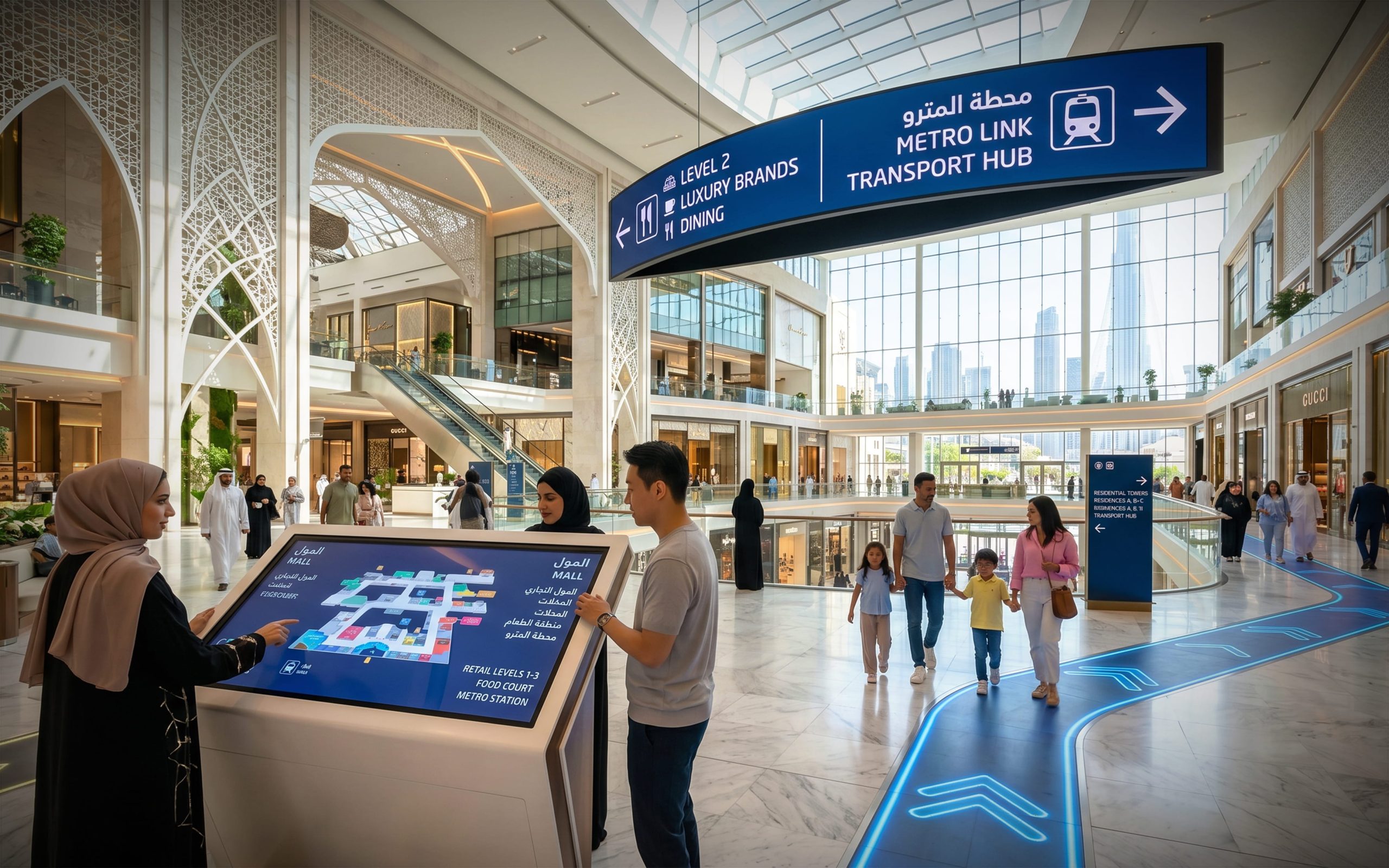
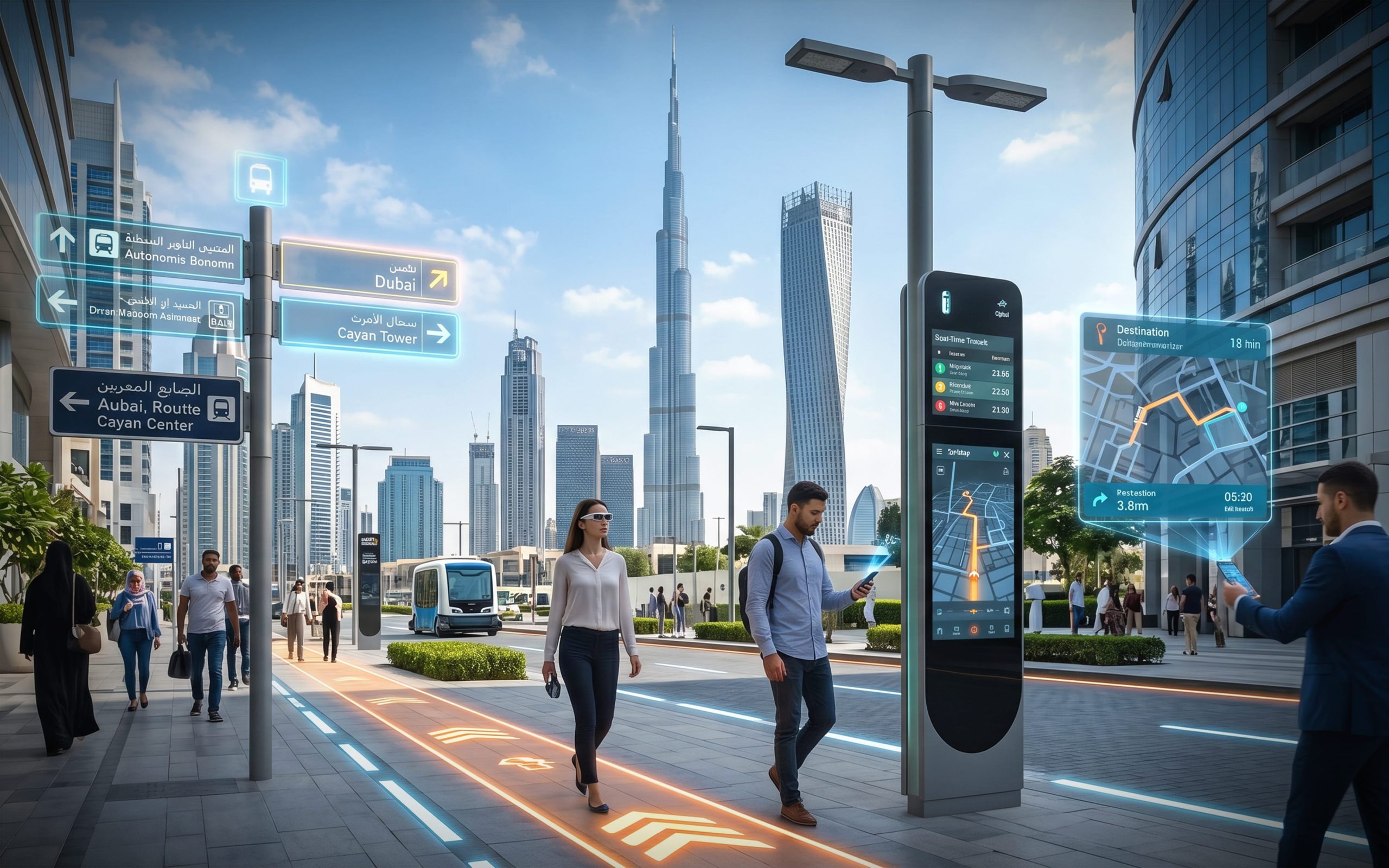
Digital tools can respond to change. They can show live information, update a directory in minutes and offer step-by-step routes to a specific destination. They are especially useful in buildings where occupants and layouts change often, or where the number of destinations is too large to show on a static sign.
They also bring a dependence on power, networks, content management and maintenance. For that reason they are best used to extend a physical system, not to replace it.
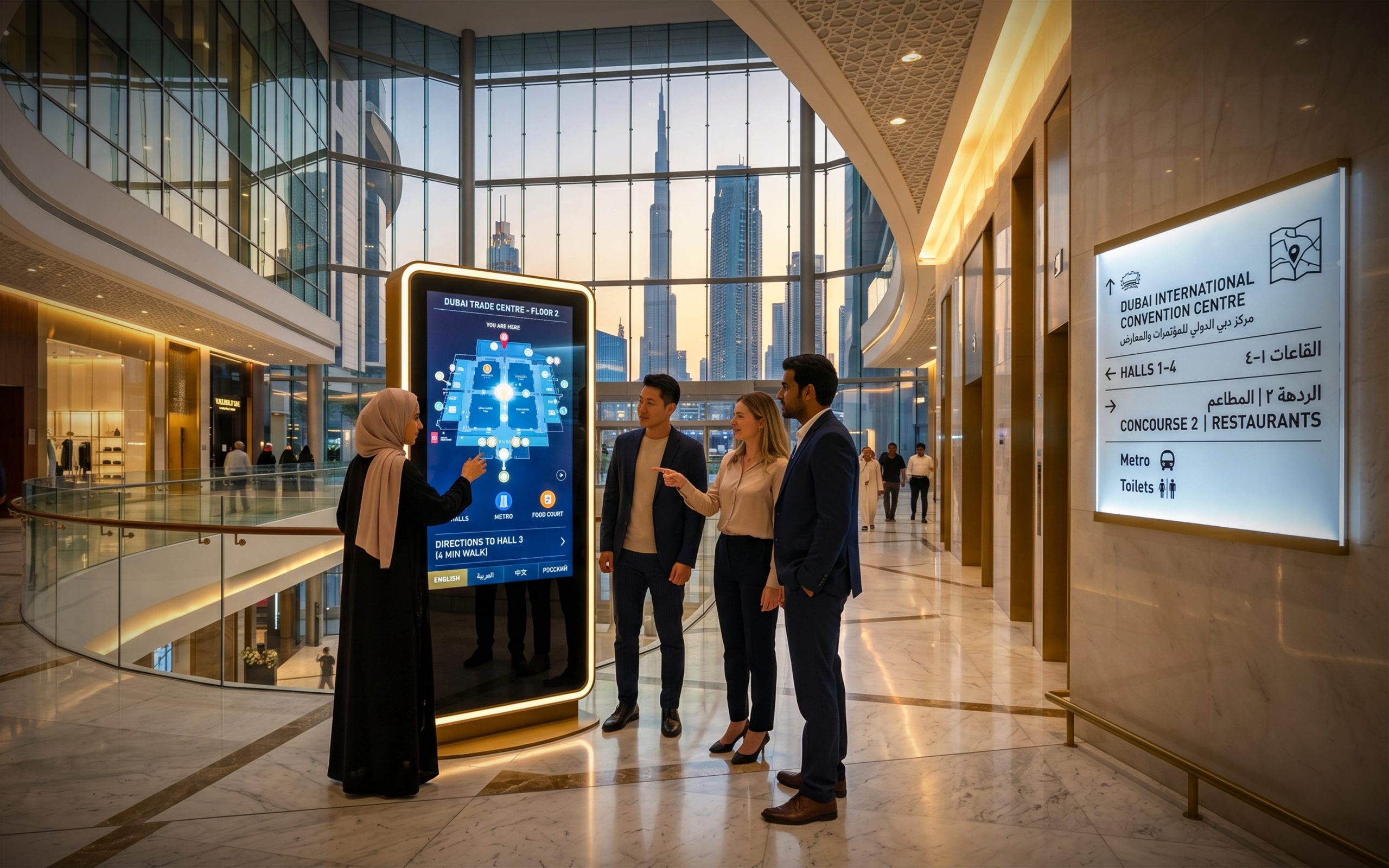
Digital information is most valuable at moments of complexity, such as an arrival hall with many possible destinations, where a short search or a clear route preview can replace several minutes of uncertainty.
02Keeping physical and digital consistent
A visitor who reads a directory screen and then follows a sign should meet the same names, the same terminology and the same logic. When the two disagree, trust in both falls. Shared naming, a single source of destination data and a coordinated visual language prevent that.
03Planning for the long term
Screen positions need power, data and access for service. Content needs an owner and a process, so that information stays accurate. Interfaces should be legible at a glance, usable by people of different heights and abilities, and calm enough not to compete with the building. A digital layer that is easy to maintain is far more likely to remain useful.