01Designing for the full range of visitors
Inclusive wayfinding starts from a simple premise: a building should be as easy to understand for a visitor who cannot see a sign, hear an announcement or climb a stair as it is for anyone else. That covers people with visual, hearing, mobility and cognitive differences, as well as visitors who are older, unfamiliar with the language or simply under stress. Designing for this range tends to improve the experience for everyone.
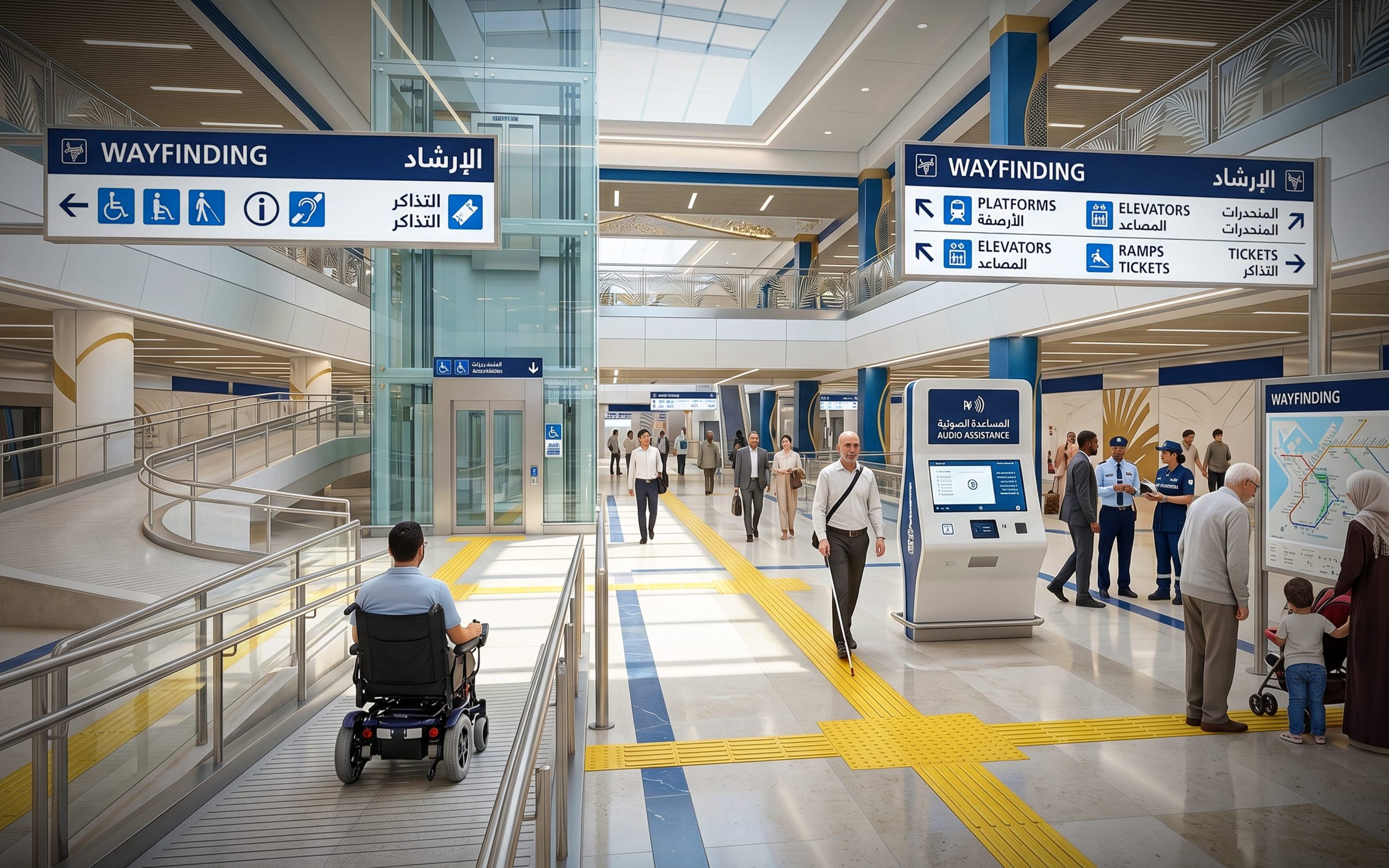
Good practice begins with the route. Step-free paths should be the obvious paths, not a separate trail that visitors have to discover. Where a route differs, the information should say so early, before a person commits to a corridor or a stair.
Inclusive design also recognises that needs change over a single visit. A visitor with a heavy bag, a pushchair or a temporary injury may need a step-free route for the first time, and a newcomer to the country may rely on pictograms rather than words.
02Information that works in more than one way
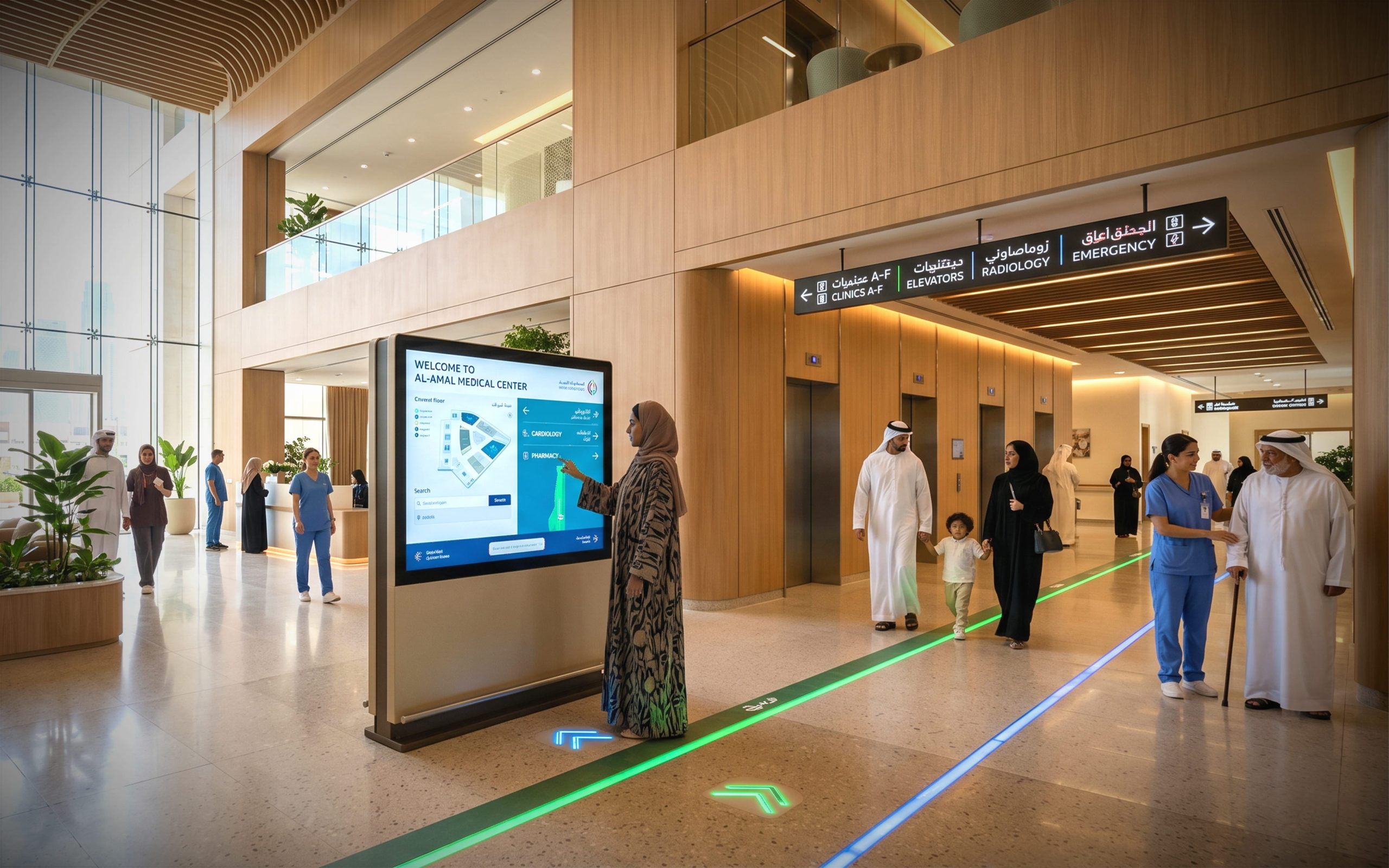
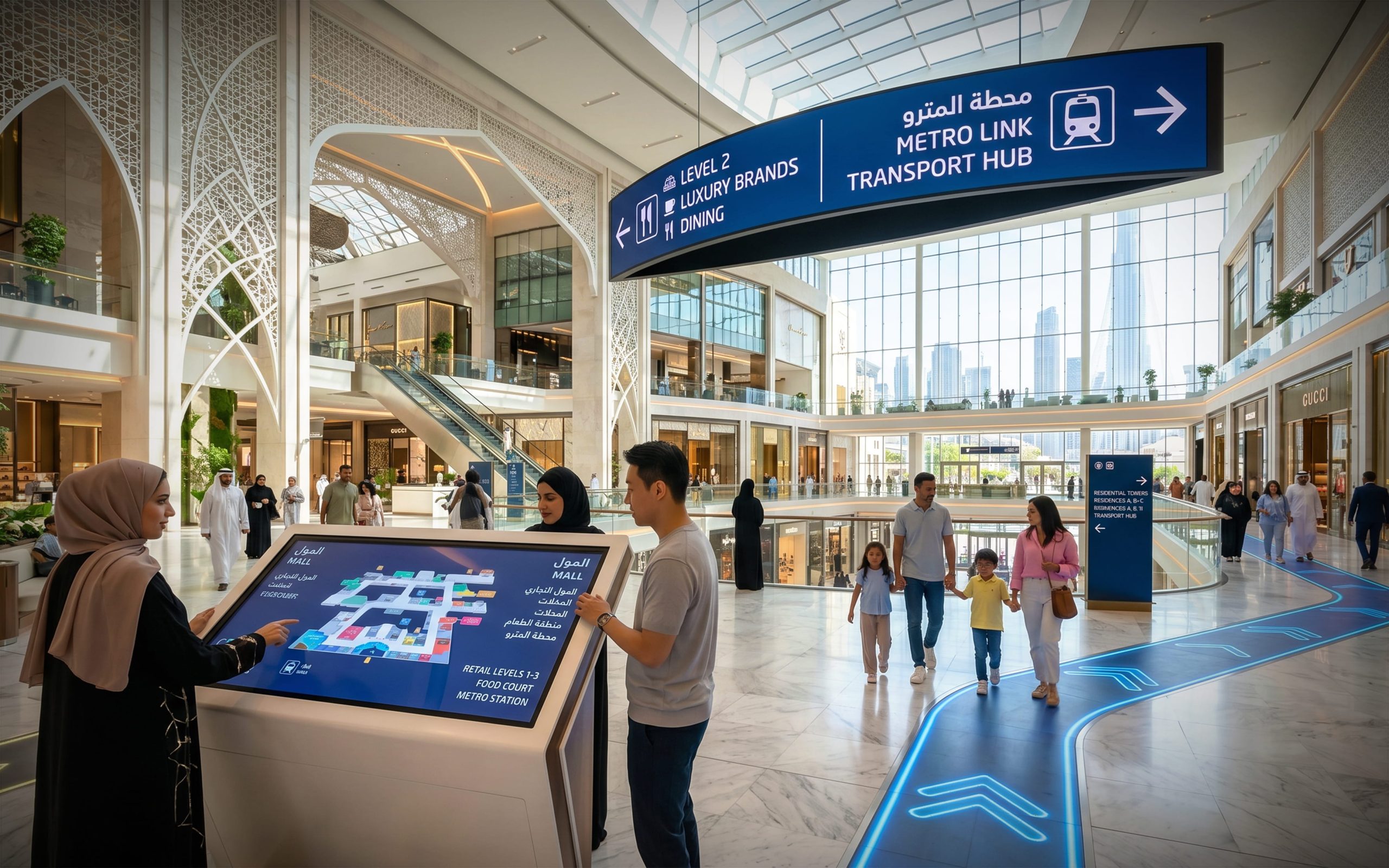
Signs rely on contrast, size, typeface and position. Strong tonal contrast between characters and background, matt finishes that avoid glare, and mounting heights that suit both standing and seated viewers all make information easier to read. Pictograms and consistent terminology help visitors who are less comfortable with written language, and bilingual content should be organised so that neither language overwhelms the other.
Tactile and braille elements, audible guidance and good lighting add other ways in. They work best when planned into the system from the start rather than fitted to it later.
03Delivering it consistently
Inclusive design depends on detail. The tactile marking that is specified has to be fixed where a hand will find it. A contrast ratio that works on a drawing has to survive the building's real lighting. Reviewing samples, checking positions on site and testing routes with the people who use them are the most reliable ways to keep an accessible design accessible once it is built.